How to Read a Protein Powder Label: Servings, Fillers, and Marketing Tricks
A protein powder label is mostly designed to be read at a glance. "30g PROTEIN" in 80-point type on the tub. That number is meaningless without context. A 30g protein scoop from a 45g scoop is 67% protein. A 30g protein scoop from a 31g scoop is 97% protein. Same headline number, completely different product. The label tells you which one you actually have, but you have to know where to look.
This guide walks through every section of a protein powder label, in the order you should read them, with real examples from products in our catalog. Pricing data is from US retailers as of mid-May 2026.
Quick answer: Read the label in this order: serving size, protein-per-scoop, ingredient list (sorted by weight), amino acid profile if published, and certifications. Most marketing tricks are in the gap between the headline protein number and the actual protein-to-total-grams ratio.
The Four-Step Label Reading Checklist
Read every protein powder label in this order:
- Serving size in grams. Not "1 scoop" - the actual gram weight.
- Protein per serving in grams. Compare ratio: protein-grams divided by serving-grams.
- Ingredient list, in order. Ingredients are listed by weight, heaviest first.
- Certifications. NSF, Informed Sport, Labdoor, third-party testing.
Step 1: The Serving Size Trick
Look at the Nutrition Facts panel and find "Serving Size." It will be in grams. This is the single number you need to compare apples to apples between brands. Once you have it, divide the protein grams by the serving size to get the protein-to-powder ratio.
| Product | Scoop Size | Protein | Ratio |
|---|---|---|---|
| Dymatize ISO100 (isolate) | 30g | 25g | 83% |
| ON Gold Standard Whey (blend) | 30g | 24g | 80% |
| Nutricost Whey Concentrate | 34g | 25g | 74% |
| Body Fortress Super Advanced | 45g | 30g | 67% |
| BSN Syntha-6 (whey + casein blend) | 47g | 22g | 47% |
| BSN True Mass 1200 (mass gainer) | 176g | 50g | 28% |
The ratio tells you what kind of product you actually own. Above 85% is isolate territory. 70-85% is whey blend or pure concentrate. 50-70% is a flavor-heavy blend with significant carbs. Below 50% is a mass gainer or meal-replacement, which is fine if that's what you wanted but disappointing if you thought you were buying a protein powder.
The Body Fortress Super Advanced label is a textbook serving-size inflation example. The 45g scoop yields 30g of protein, which sounds great until you realize a 30g scoop of Nutricost gets you 25g of protein, only 5g less. The actual protein per gram of powder is essentially the same. Body Fortress just uses a bigger scoop, so the headline number is higher.
Step 2: The Ingredient List Order
FDA rules require ingredients to be listed by weight, heaviest first. This is the single most useful piece of regulatory disclosure in the industry. It tells you exactly what the product is, in order.
What to look for on a quality protein:
- First ingredient should be a protein source. Examples: whey protein concentrate, whey protein isolate, micellar casein, pea protein isolate, milk protein concentrate.
- Second through fourth ingredients are usually flavoring, cocoa, natural and artificial flavors, gum (xanthan, guar) for texture, and sweeteners. None are red flags by themselves.
- The first non-protein ingredient should not be a sugar. If sugar (or cane sugar, dextrose, maltodextrin in a non-mass-gainer) appears in the top three, that is a carb product being marketed as protein.
Compare these two labels (paraphrased to show the relevant differences):
| Quality Protein | Suspect Protein |
|---|---|
| Whey Protein Isolate, Whey Protein Concentrate, Natural Flavors, Cocoa, Lecithin, Sucralose | Maltodextrin, Whey Protein Concentrate, Soy Protein, Sugar, Glycine, Taurine, Cocoa, Flavors |
The second label tells you that the primary ingredient by weight is maltodextrin (a sugar), with whey only second. The free aminos glycine and taurine are also red flags for amino spiking (more on that below). Anything with this ingredient pattern is functionally a mass gainer or weight-gain supplement, regardless of how it is marketed.
Step 3: Amino Spiking: The Most Common Trick
Amino spiking is the practice of adding cheap free-form amino acids to a protein blend specifically to inflate the protein count on the label. Total protein on a Nutrition Facts panel is calculated from total nitrogen content. Free aminos like glycine, taurine and creatine all contain nitrogen, so they get counted as "protein" even though they don't contribute to muscle protein synthesis the way intact whey or casein does.
Three ingredients to scrutinize:
- Glycine. A cheap, sweet-tasting amino acid. Adding 5g to a scoop raises the nitrogen count by about 1g, which translates to 6g of "protein" on the label. Glycine has no muscle-building value at supplement doses.
- Taurine. Same trick. Often listed alongside glycine. Some legitimate energy formulas include taurine, but on a protein powder label it is almost always there for the nitrogen.
- Creatine in non-creatine products. Creatine is a legitimate supplement, but adding 1g to a "whey protein" formula is usually nitrogen inflation. If you want creatine, buy it separately at $0.10 per scoop. You're paying $1+ per scoop for the same gram in a protein tub.
The lawsuit history here is real. Multiple major brands (including ON, MuscleTech and others) have faced amino-spiking class actions in the 2010s. Most reformulated. The cleanest signal that a brand does not amino-spike: brands like Transparent Labs and Legion Athletics publish full amino acid breakdowns from independent labs and explicitly do not include free aminos in their protein formulas.
Step 4: The Proprietary Blend Red Flag
A proprietary blend is a grouping of multiple ingredients listed by total combined weight, not individual weights. You will see something like:
Pro Mass Whey Blend (35g):
Whey Protein Concentrate, Whey Protein Isolate, Whey Protein Hydrolysate, Micellar Casein, Egg Albumin
The proprietary blend tells you the total is 35g but does not tell you how much of each ingredient you are getting. If the breakdown is 33g concentrate, 1g isolate, 1g hydrolysate, you are paying isolate prices for what is essentially concentrate. The same blend at 5g concentrate, 25g isolate, 5g hydrolysate is a premium product.
Reputable brands have moved away from proprietary blends because customers caught on. Transparent Labs built their entire brand identity on not using them. Legion Athletics publishes ratios for every blend. Brands that still hide ratios are signaling either that the ratios are unflattering or that they care more about competitive secrecy than buyer trust.
Step 5: Sweeteners, Fillers, and Texture Agents
The bottom half of every protein powder ingredient list is functional additives. Most are safe and useful. A few are worth understanding:
- Sucralose / acesulfame potassium. Calorie-free sweeteners. Safe for healthy adults at supplement doses. Some people report GI sensitivity at high intake (multiple scoops daily).
- Stevia / monk fruit. Natural sweeteners. Generally well-tolerated but can have aftertaste in protein contexts.
- Soy lecithin / sunflower lecithin. Emulsifiers. Help powder mix into liquid. Safe at all doses.
- Xanthan gum / guar gum. Texture agents. Make shakes thicker without affecting macros. Can cause GI distress in very high doses (much higher than what's in a single scoop).
- Maltodextrin (in protein, not mass gainers). A red flag if it appears in the top three ingredients of a product marketed as "protein." Acceptable in mass gainers where carb delivery is the point.
- Carrageenan. Common in plant proteins for texture. Some research suggests GI inflammation at very high doses. Most brands have removed it from modern formulas.
Step 6: Third-Party Testing and Certifications
The label is what the manufacturer says is true. Third-party testing is independent verification. Three programs to look for:
- NSF Certified for Sport. The strictest. Tests for banned substances on the WADA list and verifies label claims. Used by professional sports leagues. Klean Athlete and select Ascent products carry it.
- Informed Sport / Informed Choice. Similar scope. MyProtein, Optimum Nutrition and others use this for athlete-targeted SKUs.
- Labdoor.com. A consumer-funded testing service that publishes results publicly. Searches by brand show whether protein content matches the label and whether contamination is detected.
The absence of certification does not automatically mean a product is bad: Nutricost is not NSF certified but consistently passes Labdoor independent testing. The presence of certification is a strong positive signal that the brand is willing to be audited.
The Marketing Phrases That Mean Nothing
These phrases appear on labels constantly and carry zero regulatory weight:
- "Premium quality": Marketing copy. No definition, no standard.
- "Scientifically formulated": Marketing copy. All products are formulated.
- "Doctor recommended": One doctor recommended it. Possibly the doctor on the formulation team.
- "Pharmaceutical grade": Has no regulatory meaning in supplements.
- "Clinically proven": The ingredient may have been studied. The specific product blend has likely not been.
- "Natural": Has no FDA definition for supplements.
These phrases are not lies. They are filler text that brands use because it makes the label feel more authoritative. Ignore them and read the actual nutrition panel.
What is Value Score?
Value Score on ProteinPrice combines cost per gram of protein, retailer reliability, label-claim accuracy from third-party testing, and customer-reported flavor and mixability. It's our attempt to do all this label-reading work once and give you a single number to compare. Browse the live Value Score rankings or read more about our methodology at how it works.
Three Labels Worth Studying
Transparent Labs Whey Isolate
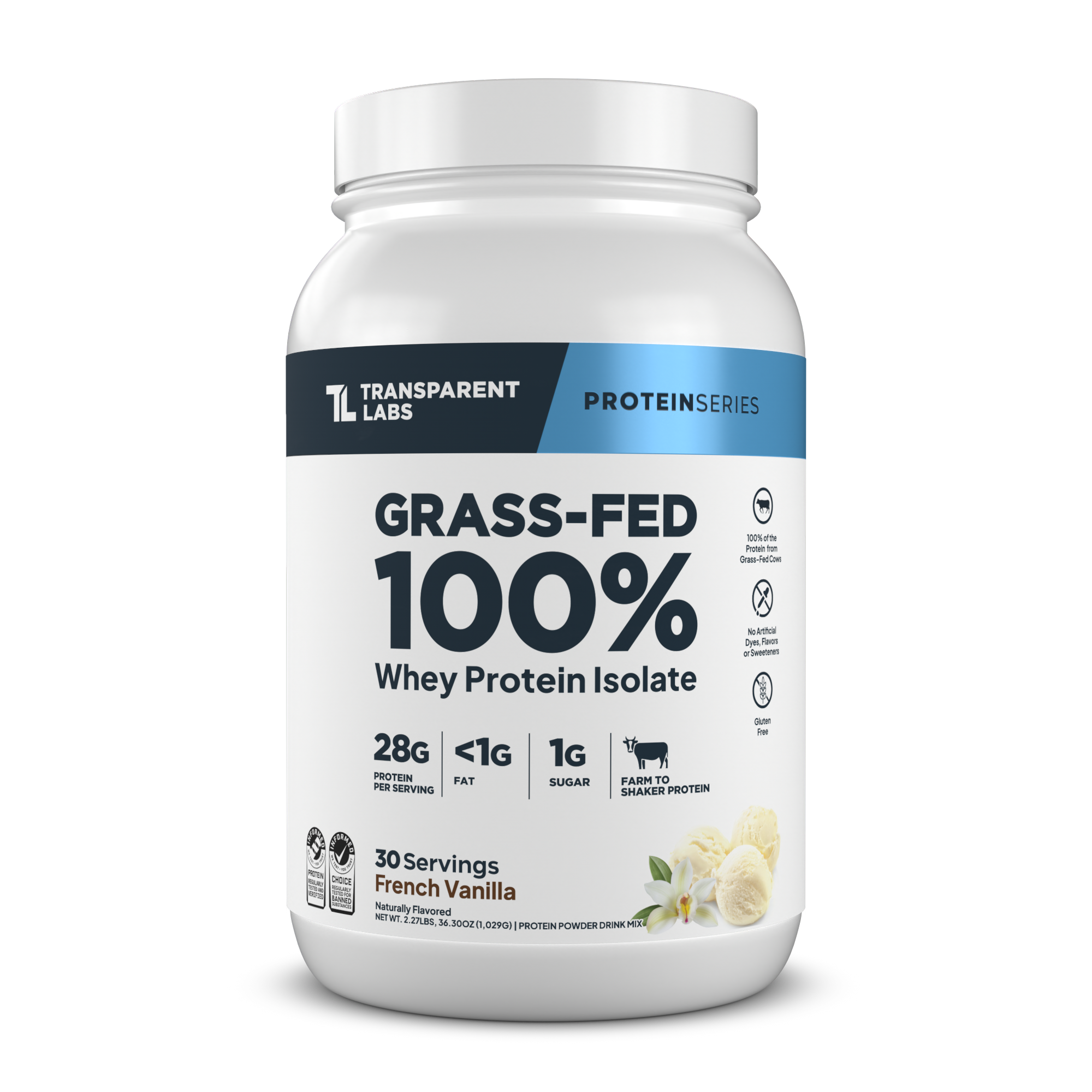
A clean-label benchmark. Ingredient list: 100% Grass-Fed Whey Protein Isolate, Cocoa, Natural Flavors, Stevia, Sea Salt. That's it. No proprietary blend, no free aminos, full amino acid breakdown published on the product page.
ON Gold Standard 100% Whey

The mainstream gold standard. Ingredients: Protein Blend (Whey Isolate, Whey Concentrate, Whey Peptides), Cocoa, Natural and Artificial Flavors, Lecithin, Acesulfame Potassium, Sucralose. A blend, but isolate is listed first, meaning isolate is the dominant protein by weight. Informed Sport certification adds third-party trust.
Body Fortress Super Advanced Whey

A great example of a serving-size inflation. Ingredient list: Protein Blend (Whey Concentrate, Whey Isolate), Maltodextrin, Cocoa, Natural and Artificial Flavors, Soy Lecithin, Salt, Cellulose Gum, Acesulfame Potassium, Sucralose, L-Glycine. Two things to notice: maltodextrin in the top three (boosts the perceived caloric value but dilutes the protein-per-gram ratio), and L-Glycine at the end (potential amino spiking). The product is still a value champion because the per-serving price is so low, but the 30g protein headline is achieved by a 45g scoop, not by superior protein density.
Putting It All Together
You can now read any protein label and know what you have. The compressed workflow:
- Note the scoop size in grams.
- Divide protein-grams by scoop-grams. Above 70% is fine for general use, above 85% is isolate-grade.
- Check that the first ingredient is a protein source. Sugar or maltodextrin in the top three is a red flag for protein products.
- Look for proprietary blends. If present, you don't know what you're getting.
- Look for free aminos (glycine, taurine, creatine) outside the main protein blend. Be skeptical if they appear.
- Check for third-party certifications (NSF, Informed Sport, Labdoor verification).
- Compare the price per gram of protein to the live Value Score rankings.
For more on pricing math, see our price per gram guide and the live whey protein hub.
FAQ
What is amino spiking and how do I spot it?
Amino spiking is when a manufacturer adds cheap free-form amino acids (like glycine, taurine or creatine) to inflate the total nitrogen count on a label, making the product appear higher in protein than it actually is. To spot it: check whether the protein per serving exceeds what the ingredient list could legitimately deliver, and look for cheap aminos listed as separate ingredients near the top of the list. Reputable brands publish independent third-party amino acid breakdowns.
What is a proprietary blend and is it a red flag?
A proprietary blend is a grouping of ingredients listed only by total combined weight, not by individual weights. This obscures how much of each ingredient you are getting. It is most common in pre-workouts but appears in some protein powders. As a buyer, treat proprietary blends as a yellow flag: the manufacturer is choosing not to disclose ratios. Brands like Transparent Labs and Legion intentionally do not use them.
How do brands inflate serving sizes to look better?
The most common trick is making the scoop bigger to hit a marketing number like 30g protein per serving, when the actual protein-to-powder ratio is identical to a competitor at 25g. Body Fortress uses a 45g scoop to claim 30g protein; Optimum Nutrition uses a 30g scoop for 24g protein. Same ratio (about 66-80% protein), different scoop size. Always check protein-to-powder ratio if you want apples-to-apples comparison.
What ingredients should I avoid in a protein powder?
Three to be cautious about: amino spiking ingredients (free glycine, taurine, creatine listed alongside whey when they shouldn't make a meaningful protein contribution), heavy artificial colorings like FD&C Yellow 5, and high-quantity sugar alcohols like maltitol that can cause GI distress. Most other ingredients (sucralose, acesulfame potassium, soy lecithin) are safe for healthy adults despite social media noise.
What does "protein blend" versus "pure whey" mean on a label?
A protein blend combines multiple protein sources (typically whey concentrate, whey isolate, and casein) in unspecified ratios. Pure whey or 100% whey indicates a single protein type. Blends are not inherently bad: Optimum Nutrition Gold Standard is a whey blend that outperforms many pure-whey products. The issue is when blend ratios are hidden under proprietary blends, making it impossible to know how much isolate you're actually getting.
How can I verify a protein powder's quality?
Three independent tools: Labdoor.com publishes third-party tested protein content for 100+ products; NSF Certified for Sport and Informed Sport check for banned substances and label accuracy; ConsumerLab.com runs membership-based testing. Brands that have passed these tests prominently display the certifications. Brands that quietly avoid them are not necessarily bad, but you are relying on the label's honesty.
Skip the label work, see live rankings
352 products, 12 retailers, Value Scores updated hourly.
View Live Rankings →