The Complete Guide to Casein Protein (2026)
Casein is the other milk protein. Where whey absorbs in 1-2 hours and is the protein of choice for post-workout speed, casein absorbs over 5-7 hours and is the protein of choice for sustained amino acid delivery, particularly overnight. It comprises roughly 80% of cow's milk protein versus whey's 20%, but in the supplement aisle that ratio is inverted: whey outsells casein by roughly 10 to 1. The reason is positioning. Whey is marketed as "the muscle protein." Casein is marketed as "the bedtime protein." That positioning has kept casein in a permanent supporting role.
For serious lifters and physique athletes the case for casein is straightforward. The body undergoes a small amount of muscle protein breakdown overnight because no amino acids are entering from food. Casein before bed provides a slow drip of amino acids that may modestly reduce overnight breakdown and support repair. The evidence is real but not enormous. For most casual gym-goers casein is optional. For people who train hard, hit high protein targets, and care about marginal gains, casein is one of the more defensible "add-on" supplements after whey, creatine, and basic vitamins.
This guide is the complete reference for casein in 2026: what it actually is, how the production process differs from whey, who genuinely benefits from it, the highest-value products in our 10-product catalog, what to look for on the label, real pricing tiers, common mistakes, dosage and timing, storage, side effects, and a long FAQ. By the end you will know whether casein belongs in your routine and exactly which tub to buy.
Quick answer: The best value casein in 2026 is MyProtein Slow-Release Casein 5.5lb at $39.99 direct (Value Score 58). The most popular mainstream pick is Optimum Nutrition Gold Standard 100% Casein 4lb at $49.99 on Walmart. For lactose sensitivity, Dymatize Elite Casein 4lb at $44.99 on Amazon. The cleanest label is Naked Casein 5lb at $89.99 on Amazon (single-ingredient, unflavored).
In this guide
- What Is Casein Protein?
- How Casein Is Made
- Casein vs Alternatives
- Top Picks Right Now
- How to Choose: 7 Things to Look For
- Price + Value Analysis
- A Note on the Science
- Common Mistakes Buyers Make
- How to Use Casein
- Storage + Shelf Life
- Side Effects + Considerations
- Frequently Asked Questions
- Related Guides
What Is Casein Protein?
Casein is the dominant protein in cow's milk. About 80% of milk's total protein content is casein; the other 20% is whey. Where whey is the liquid that drains off when milk curdles, casein is the curd itself. Cheese is essentially concentrated casein. From a chemistry point of view, casein in milk exists in particle-like structures called micelles, which are clusters of casein subunits held together by calcium phosphate bridges. The micelle is what gives casein its slow-release behavior: when it hits stomach acid, the micelle structure causes the casein to gel and resist digestive enzymes, releasing amino acids slowly over 5-7 hours.
This slow-release profile is the main reason casein exists as a separate supplement category. Whey delivers a sharp amino acid spike, then a sharp decline. Casein delivers a low, sustained plateau. Neither is universally better; they serve different physiological purposes. For overnight recovery, between-meals satiety, or any situation where you want amino acids trickling into the bloodstream for hours, casein is the right tool.
Casein is for: serious lifters seeking marginal gains in overnight muscle protein synthesis, people doing intermittent fasting who want a long-acting protein source, dieters who want satiety between meals (casein is more filling than whey), athletes with extended training schedules where post-workout amino acid window is hours wide, and parents looking for an evening snack that delivers protein without spiking insulin. Casein is not necessary for most casual gym-goers; whey alone covers most needs.
How Casein Is Made
Commercial casein is produced through one of two main techniques. The choice of method significantly affects the resulting product.
Micellar casein (membrane-filtered). Modern premium casein is produced by ultrafiltering milk through membranes that retain casein micelles and allow whey, lactose, and minerals to pass through. This method preserves the native micelle structure intact, which is what produces the characteristic slow-release behavior. The resulting product is called micellar casein and is the standard for quality casein supplements. Optimum Nutrition Gold Standard Casein, Dymatize Elite Casein, and Naked Casein are all micellar.
Caseinate (acid-precipitated). Older and cheaper. Milk is acidified to pH 4.6, which causes casein to coagulate. The curd is collected, washed, and neutralized with sodium or calcium hydroxide. The resulting product is sodium caseinate or calcium caseinate. Caseinates dissolve more quickly than micellar casein and have a slightly faster amino acid release profile. They are common in protein bars and some bulk powders. They are not necessarily inferior, just different. Most bulk caseinate is used as a food ingredient rather than sold as a supplement.
Hydrolyzed casein is micellar casein partially broken down by enzymes. This makes it absorb faster and reduces the slow-release advantage that casein normally has. Hydrolyzed casein is mostly used in clinical nutrition for patients with impaired digestion. For sports supplementation it is uncommon and not particularly advantageous.
The finished casein powder is spray-dried, blended with flavor systems (which is harder than for whey because casein has a less neutral starting flavor), and packaged. Most US-shipped casein comes from Wisconsin and Idaho dairy. New Zealand grass-fed casein exists at a premium and is rarely worth the cost.
Casein vs Alternatives
Casein vs whey. The fundamental comparison. Whey absorbs in 1-2 hours, peaks at 60-90 minutes. Casein absorbs over 5-7 hours, peaks at 3-4 hours. Whey is better post-workout. Casein is better before bed or between meals. Many lifters use both, sometimes blended in the same shake. See our whey master guide.
Casein vs whey-casein blends. Products like BSN Syntha-6 deliver a fast initial spike from whey plus a sustained tail from casein. For users who want both effects in one tub, blends are convenient. For users who specifically want the slow-release benefit, pure casein is more efficient.
Casein vs whole food protein (cottage cheese, Greek yogurt). Cottage cheese is roughly 70% casein by protein content and delivers a similar slow-release profile in whole-food form. A bowl of cottage cheese before bed is biochemically similar to a casein shake. For people who prefer food over supplements, this is a defensible swap. The downside is volume: 30g of casein from cottage cheese is roughly 2 cups, versus a single scoop of powder.
Casein vs egg protein. Egg protein is intermediate in absorption speed (faster than casein, slower than whey isolate). It is an option for people avoiding dairy. Per gram it is more expensive than casein. Most casein-style sustained release is harder to mimic with egg protein.
Casein vs plant protein. No plant protein replicates casein's slow-release behavior. Vegans who want a slow-release option are stuck with eating a fat-and-fiber-rich meal before bed, or accepting that plant proteins all release amino acids over 2-3 hours rather than 5-7. See our plant protein guide.
Top Picks Right Now
Casein is a smaller category in our catalog with 10 tracked products. These are the highest-Value-Score options in May 2026.
| # | Product | Type | Best Price | Score |
|---|---|---|---|---|
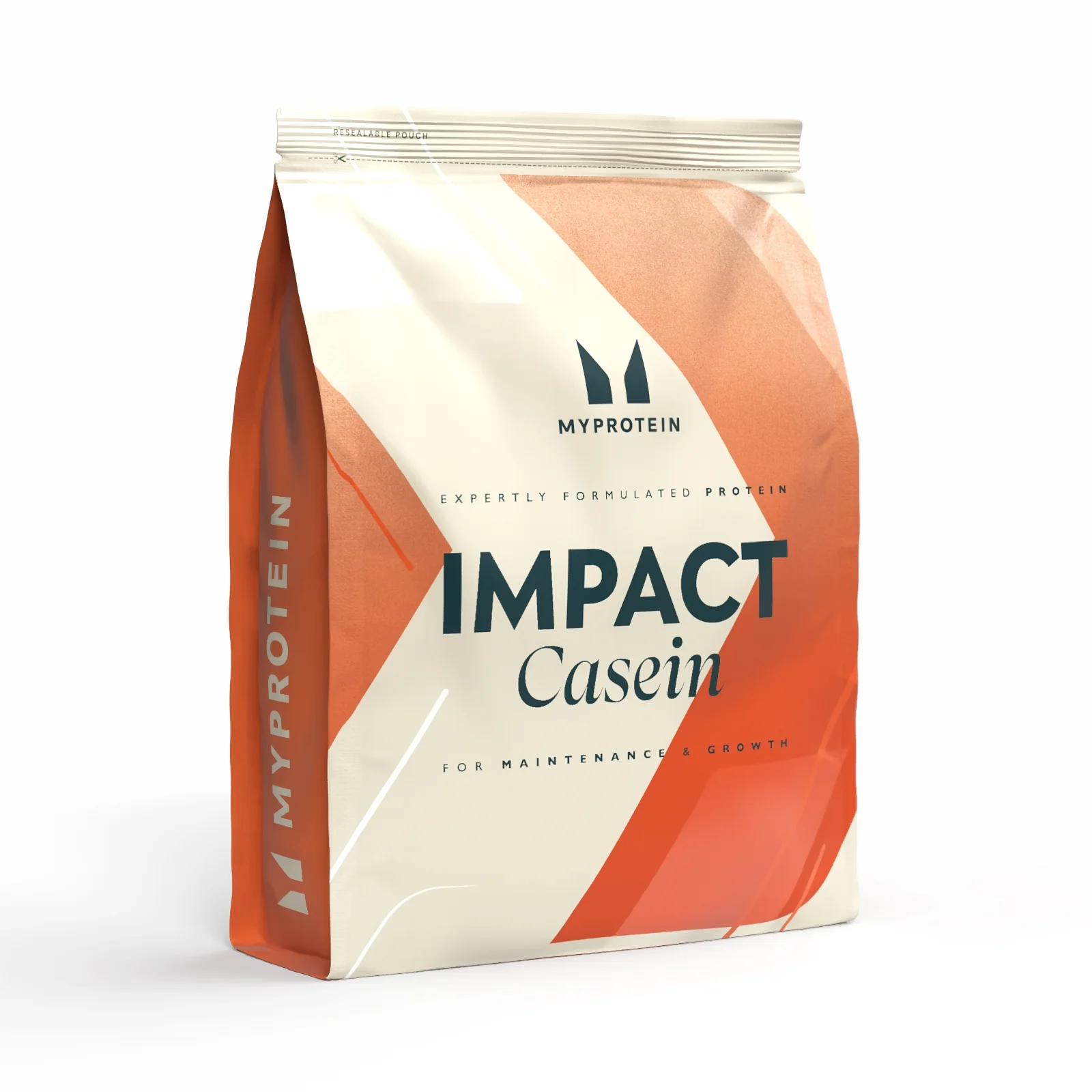
| 1 | MyProtein Slow-Release Casein 5.5lb | Micellar | $39.99 (MyProtein) | 58 |
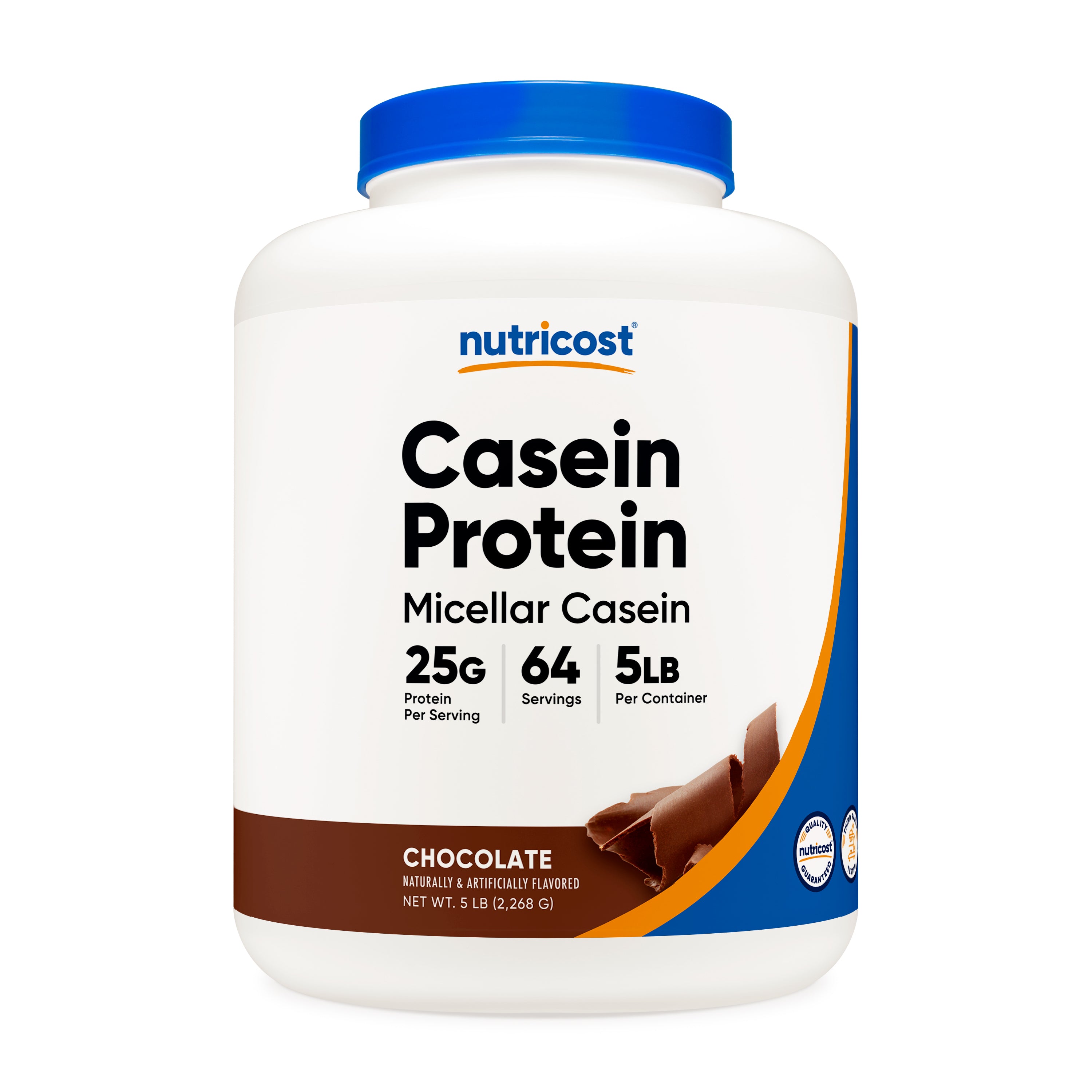
| 2 | Nutricost Casein Protein 5lb | Micellar | $41.99 (Amazon) | 48 |
| 3 | Naked Casein 5lb | Micellar, unflavored | $89.99 (Amazon) | 44 |
| 4 | Six Star Casein+ Micellar 4lb | Micellar | $54.99 (Amazon) | 30 |
| 5 | Cellucor COR-Performance Casein 4lb | Micellar | $49.99 (Amazon) | 30 |
| 6 | Optimum Nutrition Gold Standard 100% Casein 4lb | Micellar | $49.99 (Walmart) | 29 |
| 7 | Dymatize Elite Casein 4lb | Micellar | $44.99 (Amazon) | 25 |
1. MyProtein Slow-Release Casein (Value Score 58)
MyProtein's 5.5lb bag direct from us.myprotein.com is the best-value casein in our catalog. 83 servings of 24g protein per scoop, micellar casein from EU dairy, $39.99 list price and frequently $30 during monthly flash sales. The chocolate smooth flavor is reliable, mixability is acceptable (casein is always slightly thicker than whey), and the price per gram is roughly 40% lower than any US-shelf alternative. Downside: 4-7 day shipping from US fulfillment.
2. Nutricost Casein Protein (Value Score 48)
Nutricost's 5lb tub at $41.99 on Amazon delivers 73 servings of 24g micellar casein. Plain packaging, basic flavor, no marketing budget. Buy if you want the cheapest credible US-stocked casein. The chocolate is acceptable; vanilla is forgettable.
3. Naked Casein (Value Score 44)
The clean-label option. Naked Nutrition's 5lb tub is a single ingredient: micellar casein. No sweeteners, no flavors, no fillers. 76 servings of 26g protein per scoop. At $89.99 on Amazon this is premium pricing, but buyers who want absolute transparency get exactly that. Mix with milk and a banana for flavor.
4-7. The mainstream casein tier.
Six Star Casein+, Cellucor COR-Performance, ON Gold Standard, and Dymatize Elite all sit at similar price points and similar quality. The choice between them is brand preference and flavor preference more than meaningful product difference. ON Gold Standard Casein has the longest market history and the most consistent flavor track record. Dymatize Elite has slightly better mixability. Six Star (Iovate, sister brand to MuscleTech) is the cheapest at the Walmart shelf.
How to Choose: 7 Things to Look For
1. Confirm it is micellar, not caseinate
The ingredient list should say "micellar casein" or "milk protein concentrate." If the first ingredient is "calcium caseinate" or "sodium caseinate," you are buying caseinate, which absorbs faster than true micellar. Caseinate is fine for general use but does not deliver the same slow-release advantage.
2. Protein per scoop and per dollar
Most caseins deliver 24-26g per scoop. Total protein in the tub divided by price is the honest comparison. Casein typically costs $0.025-$0.045 per gram of protein. Anything below $0.030 is excellent.
3. Sweetener system
Casein is harder to flavor than whey, so sweetener choice matters more. Sucralose-heavy flavors can taste artificial. Stevia sometimes leaves bitterness. Real sugar (rare in casein) is the most palatable but adds carbs. Try a single-serving sample before committing to a 5lb tub.
4. Mixability claims
Casein is naturally thicker than whey because of its gelling behavior. Some brands address this with lecithin and gum thickeners. Read reviews for "clumpy" complaints. ON Gold Standard and Dymatize Elite have the best mixability track record.
5. Lactose content
Micellar casein contains roughly 2-4% lactose, between whey concentrate (4-8%) and whey isolate (under 1%). If you are lactose-sensitive but want casein, look for "lactose-free casein" products or use lactase enzyme tablets alongside.
6. Third-party testing
NSF Certified for Sport, Informed Sport, or published Certificates of Analysis. Mainstream brands invest here; budget brands less consistently.
7. Source and ethics
Conventional dairy from Wisconsin or Idaho is the default. Grass-fed casein is rare and not particularly worth the premium for slow-release purposes. Organic casein exists from a few brands at significantly higher price points.
Price + Value Analysis
Casein pricing in 2026 splits into three tiers.
Budget casein ($0.022-$0.028 per gram protein). MyProtein flash sale prices, Nutricost. Functional, plain, cheap.
Mainstream casein ($0.028-$0.040 per gram protein). ON Gold Standard, Dymatize Elite, Cellucor COR-Performance, Six Star, MuscleTech. The bulk of US shelf inventory. Reliable, flavored, trusted.
Premium casein ($0.040-$0.055 per gram protein). Naked Casein, Transparent Labs Casein, premium clean-label options. Single-ingredient or natural sweetener systems.
For numerical context: a 4lb tub at one scoop per day lasts roughly 50 days. Casein use is typically less frequent than whey, with many lifters taking only one casein shake per day before bed. Annual casein cost ranges from $200 (budget) to $400 (premium).
The casein category sees less price competition than whey because it is a smaller and more specialized category. Sales discounts are less common. The MyProtein flash sale window remains the most reliable way to get casein at a meaningful discount.
One pricing curiosity: ON Gold Standard Casein costs roughly 20% more per gram than ON Gold Standard Whey from the same brand. This is true across most brands that offer both. The reason is volume economics. Whey volume is roughly ten times casein volume, which drives down the per-unit cost of production. Casein commands a quality premium on top of its higher base manufacturing cost. There is no realistic prospect of casein reaching whey concentrate pricing.
A useful price-watching pattern: casein deals tend to cluster around Black Friday week, Memorial Day, and the New Year. Outside these windows, the price ceiling is fairly stable. If you use casein regularly, stocking up during these windows can save $40-80 per year versus buying at full price.
A Note on the Science
The case for casein has shifted modestly over the last decade as researchers have refined their understanding of overnight muscle protein synthesis. The 2012 study by Res et al., one of the most-cited papers in the niche, found that 40g of casein before bed produced measurably higher overnight muscle protein synthesis compared to placebo in young men following resistance training. Subsequent replications have generally supported the finding but with smaller effect sizes than the original.
The current consensus among sports nutrition researchers is that bedtime casein modestly increases overnight muscle protein synthesis in trained individuals at typical doses. The magnitude of the effect on actual long-term muscle gain is uncertain and likely small for any given individual. Whether casein is "worth it" depends on how seriously you take marginal improvements. For a competitive bodybuilder, the answer is usually yes. For a casual gym-goer hitting protein targets through whole food and whey, casein is optional and possibly redundant.
One nuance: the bedtime casein effect appears stronger in older adults. Anabolic resistance in aging muscle means older adults benefit more from each additional opportunity to hit muscle protein synthesis. For lifters over 50, casein before bed may have a larger marginal benefit than for lifters in their 20s.
Common Mistakes Buyers Make
Buying caseinate when you wanted micellar. Read the ingredient list. Caseinate is not bad, but it does not deliver the same slow-release behavior most people want from casein.
Mixing casein in a shaker bottle and complaining about thickness. Casein is supposed to be thicker. The gelling behavior is the slow-release mechanism. Use a blender or accept the texture.
Taking casein post-workout instead of whey. Casein's slow release works against you post-workout when you want a fast amino acid spike. Use whey post-workout, casein before bed.
Skipping casein because "the studies are mixed". The studies are mixed because the effect size is modest. For casual users this may not matter. For serious lifters seeking marginal gains, casein before bed remains one of the better-evidenced "add-on" supplements.
Buying casein for general protein needs. Casein is more expensive than whey concentrate per gram. If you just need to hit daily protein, whey is more cost-effective. Reserve casein for the slow-release window.
Assuming all casein flavors taste similar. They do not. Casein flavoring is harder than whey, and flavor quality varies more across brands. Sample before committing.
How to Use Casein
Dosage. 30-40g protein per dose, taken 30-60 minutes before bed. Some lifters take a second dose in the morning or between meals. There is no benefit to exceeding 40-50g per dose because absorption rate is the rate-limiter, not amount.
Timing. Before bed is the canonical use. The slow release works through the overnight fast and may modestly reduce muscle protein breakdown during sleep. Some lifters take casein 30-60 minutes after dinner instead of right before bed to avoid drinking large volumes near sleep. See our casein before bed guide.
Mixing. 10-12oz of milk works better than water. Milk adds calcium that helps casein's gelling, plus body. Use a blender or shake very hard. Some users prefer to mix casein with Greek yogurt to make a pudding-like snack.
In food. Casein bakes much better than whey because the proteins are more heat-stable. Casein protein pancakes, casein protein muffins, and casein-based desserts work well. Casein in oatmeal is also better than whey.
With other supplements. Casein mixes well with creatine, magnesium, and ZMA-type sleep stacks. Avoid mixing with hot beverages.
Recipes that work. Casein pudding (mix one scoop with 4oz of milk, refrigerate 20 minutes, eat with a spoon) is the most popular non-shake use. Casein protein muffins, casein protein oatmeal, and casein-based ice cream substitutes all work because casein survives heat better than whey. Cottage cheese mixed with a half scoop of casein creates a high-protein snack with sustained release.
Layering with whey. A common protocol is whey post-workout (20-30g) plus casein before bed (30-40g). Total daily intake from supplements lands around 50-70g, with the remainder coming from food. This pattern works because the two products target different physiological windows.
Storage + Shelf Life
Sealed casein lasts 18-24 months from manufacture. Most US-shipped tubs are 2-4 months from manufacture on receipt. Opened casein lasts 9-12 months in normal storage. Casein actually keeps slightly longer than whey concentrate because of lower residual lactose.
Storage rules:
- Tightly sealed. Below 75F room temperature.
- Avoid refrigeration; causes condensation when opening.
- Use the scoop, not a wet measuring cup.
- Humid climates: use silica gel packs.
- Discard if clumps will not break, smell off, or taste turns bitter.
Side Effects + Considerations
Bloating and gas. Some users experience bloating from casein, particularly those with lactose intolerance. Micellar casein contains 2-4% lactose. Switching to a lactose-free casein or using lactase enzyme tablets usually resolves it.
Dairy allergy. True dairy protein allergy includes both whey and casein triggers. People with this allergy must avoid casein entirely.
Drowsiness. Casein contains tryptophan, the precursor to serotonin and melatonin. Some users notice mild drowsiness after a casein shake. This is part of the reason casein is taken before bed.
Kidneys. Casein at typical doses does not damage kidneys in healthy adults. People with pre-existing kidney disease should consult their physician before adding any high-protein supplement.
Sweetener sensitivity. Same as whey: some users get gas from sucralose, polyols, or stevia. Try a different sweetener system if you suspect this.
Acne. Casein can spike insulin and IGF-1, both associated with acne in observational studies. The link is debated. If casein use coincides with new acne, test by removing for 4-6 weeks.
Heavy metals. Mainstream and premium casein brands publish Certificates of Analysis. Budget tier is more variable but no specific casein products have been flagged by Clean Label Project investigations.
Frequently Asked Questions
Should I take casein before bed?
Casein before bed provides slow amino acid release for roughly 5-7 hours, potentially supporting muscle protein synthesis during sleep. Evidence is real but modest. 30-40g approximately 30 minutes before bed is the standard protocol.
Casein vs whey, which is better?
Neither is universally better. Whey for post-workout speed, casein for sustained release. Many lifters use both.
What is micellar casein?
Casein extracted via membrane filtration that preserves the native micelle structure, giving it slow-release behavior. The standard for quality casein.
How much casein per day?
30-40g per dose, usually once before bed. Total daily protein 1.6-2.2g per kg of body weight is the underlying target.
Does casein cause weight gain?
Casein has 4 calories per gram of protein, same as any other protein. Adding calories above maintenance causes weight gain regardless of source.
Is casein safe for daily use?
For healthy adults without dairy allergy or kidney disease, yes. People with kidney disease should consult a physician.
Can I take casein and whey together?
Yes. No negative interaction. Many lifters use whey post-workout and casein before bed.
Does casein make you bloated?
Possible if you are lactose-sensitive. Casein contains 2-4% lactose, less than whey concentrate but more than isolate.
Is casein better than other proteins for sleep?
Contains tryptophan; modest possible sleep-quality benefit. The main rationale is sustained amino acid release, not direct sleep improvement.
Can vegans get equivalent slow-release protein?
No plant-derived equivalent exists. Eating a fat-and-fiber-rich meal before bed can partially mimic the effect.
How is Value Score calculated?
Combines protein per dollar, protein per 100g, sugar content, and ingredient transparency. See how it works.
Related Guides
See live casein rankings
10 casein products, 12 retailers, refreshed throughout the day.
Browse Casein Catalog →