The Complete Guide to Mass Gainers (2026)
Mass gainer is the most-misused category in sports nutrition. It is sold as a muscle-building supplement, but its mechanism is calorie addition, not protein supplementation. A scoop of a typical mass gainer delivers 600-1250 calories, of which only 50-60g is protein and the remainder is fast-absorbing carbohydrates and added fats. Used correctly by someone who genuinely struggles to eat enough whole food, mass gainer is an excellent tool. Used incorrectly by someone who already eats enough, it is a fast track to fat gain wrapped in a fitness-industry brand. Understanding the distinction is what separates this product from being either a magic bullet or a marketing scam.
For genuine hardgainers (lifters who cannot reach a calorie surplus on normal food), athletes with extreme calorie demands (cyclists, distance runners doing two-a-day training), and underweight individuals trying to gain mass, mass gainers are useful. For most lifters who want to gain weight but already eat reasonably, the math says: skip the mass gainer, buy extra rice and chicken instead. The 9 mass gainer products in our 2026 catalog range from $0.012 to $0.025 per gram of protein, which sounds cheap, until you compare to plain whey concentrate at $0.017 per gram. The difference is that mass gainers add calories you may or may not need.
This guide is the complete reference for mass gainers in 2026: what they actually are, how they are formulated, who genuinely benefits, the highest-Value-Score products in our catalog, what to look for on the label, pricing tiers, common mistakes (the big one: thinking you need this), dosage, storage, side effects, and FAQ. By the end you will know whether mass gainer is right for you and exactly which product to buy if it is.
Quick answer: The best value mass gainer in 2026 is Nutricost Mass Gainer 6lb at $34.99 on Amazon (Value Score 30). The best mainstream pick is MuscleTech Mass-Tech Extreme 2000 7lb at $44.99 on Amazon (Value Score 23). The cleanest label is Naked Mass 8lb at $79.99 on Amazon (Value Score 18). For maximum calories per scoop, Optimum Nutrition Serious Mass 12lb at $54.99 on Amazon.
In this guide
- What Is a Mass Gainer?
- Do You Actually Need One?
- How Mass Gainers Are Formulated
- Mass Gainer vs Alternatives
- Top Picks Right Now
- How to Choose: 7 Things to Look For
- Price + Value Analysis
- Mass Gainer in a Bulk Phase Strategy
- Common Mistakes Buyers Make
- How to Use Mass Gainer
- DIY Mass Gainer Recipe
- Storage + Shelf Life
- Side Effects + Considerations
- Frequently Asked Questions
- Related Guides
What Is a Mass Gainer?
A mass gainer is a high-calorie protein supplement formulated to make it easy to consume a calorie surplus. The base is usually whey protein (concentrate or blend) at 50-60g protein per scoop. Built on top of that base is a much larger volume of added carbohydrates (dextrose, maltodextrin, oat flour, sometimes added sucrose) and a smaller amount of added fats (medium-chain triglyceride oil, coconut oil powder, sometimes added flaxseed). The total scoop weight ranges from 150g (small mass gainers) to 330g (extreme mass gainers like Optimum Nutrition Serious Mass).
The typical macro ratio is 50-60g protein, 200-260g carbs, 10-20g fat per scoop, delivering 1100-1250 calories. Smaller mass gainers cut these in half, with 25-30g protein and 100g carbs delivering roughly 600 calories. The protein-to-carb ratio ranges from 1:3 to 1:5, which is the defining feature of the category. Anything close to 1:1 is just protein with added carbs and is sold as a "lean gainer" or simply whey.
Mass gainers exist because calories are the rate-limiter on muscle growth for many lifters. The body needs a small but consistent calorie surplus to add muscle mass, roughly 200-500 calories per day above maintenance. For people with high maintenance calories (large athletes, very active workers), that means total daily intake of 3500-4500 calories. Eating that much whole food is genuinely hard. Mass gainers solve the calorie-density problem: one shake delivers what a small meal would in liquid form.
Do You Actually Need One?
Most lifters buy mass gainer and discover within a month that they did not need it. Before purchasing, run the math.
Step 1: Calculate your maintenance calories. The simple formula is body weight in pounds times 15. A 180lb lifter has roughly 2700 calorie maintenance. A 220lb lifter has roughly 3300.
Step 2: Set your target. For a slow muscle gain phase, add 250 calories per day. For a faster bulk, add 500. A 180lb lifter targeting slow bulk should eat 2950 daily; a 220lb lifter should eat 3550-3800.
Step 3: Audit your current intake honestly. Most people eat more than they think. If you are not gaining weight on what you currently eat, you are probably eating at maintenance. Track honestly for a week before deciding you cannot eat enough.
Step 4: Decide. If your target is achievable by adding one bowl of rice, two pieces of toast with peanut butter, or a Greek yogurt with granola to your existing diet, skip the mass gainer. If your target genuinely cannot be met even with these additions, mass gainer is for you.
The lifters who genuinely benefit from mass gainer: ectomorphs with naturally low appetite, college athletes trying to add 20+ pounds in a season, distance runners or cyclists with very high training volume, recovering underweight individuals on doctor recommendation, and shift workers whose schedule prevents normal meals. The lifters who buy mass gainer but should not: anyone who can hit their target by eating more rice and oats.
How Mass Gainers Are Formulated
Mass gainer formulation is engineering for calorie density and palatability. The base protein is usually whey concentrate (cheap, abundant) sometimes blended with casein or milk protein concentrate for thickness. On top of the protein base, manufacturers add carbohydrate sources at different glycemic indexes: dextrose (fast spike), maltodextrin (slightly slower), oat flour or barley flour (slow), and occasionally added sucrose (fast and sweet). The mix determines whether the scoop spikes blood sugar sharply or gradually.
Fats are added in smaller quantities: MCT oil powder for fast energy, coconut oil powder for shelf stability, sometimes added flaxseed for omega-3 claims. The total fat is usually 5-20g per scoop, much smaller than the carb load.
Cocoa powder, vanilla extract, gum thickeners (xanthan, guar), and sweeteners (sucralose, stevia, acesulfame potassium) round out the formulation. The thickeners are particularly important because plain mixed carbs and protein at high density tend to settle out in liquid; gum thickeners keep the shake mixable.
Some mass gainers add vitamins, minerals, creatine, BCAAs, or digestive enzymes. These additions are largely marketing rather than functionally meaningful at the doses included. A scoop of mass gainer with 5g of added creatine is no different from a scoop without creatine, plus a separate 5g of creatine powder. Buying these add-ons in one product is convenient but rarely cost-effective.
Mass Gainer vs Alternatives
Mass gainer vs whey plus extra food. The most relevant comparison. Adding a scoop of whey (120 calories) plus a cup of cooked oats (300 calories) plus a banana (110 calories) plus a tablespoon of peanut butter (95 calories) plus a cup of milk (150 calories) equals roughly 775 calories with 35g of protein. This is essentially a homemade mass gainer at half the cost of a commercial product, and you get whole-food fiber and micronutrients in the bargain. See our whey master guide.
Mass gainer vs lean gainer. Lean gainers have a 1:1 to 1:2 protein-to-carb ratio versus 1:3 to 1:5 for mass gainers. Lean gainers are essentially whey blends with some added carbs, useful as a half-meal but less calorie-dense than true mass gainer.
Mass gainer vs liquid meal replacements (Soylent, Huel, Ka'Chava). Meal replacements are designed to balance protein, carbs, fat, fiber, and micronutrients. Mass gainers prioritize calorie density. For weight gain, mass gainer is more efficient. For nutritional completeness, meal replacements are better.
Mass gainer vs eating more whole food. The honest answer for most users. If you can add 500 calories to your diet with food, that is almost always healthier and cheaper than mass gainer. If you cannot, mass gainer makes the calorie surplus achievable.
Top Picks Right Now
Our catalog has 9 mass gainer products. These are the highest-Value-Score options in May 2026.
| # | Product | Calories/Scoop | Best Price | Score |
|---|---|---|---|---|
| 1 | Nutricost Mass Gainer 6lb | ~600 (60g protein) | $34.99 (Amazon) | 30 |
| 2 | Vega Sport Premium Gainer 4.4lb | ~600 (vegan) | $59.99 (Amazon) | 26 |
| 3 | MuscleTech Mass-Tech Extreme 2000 7lb | ~2000 (63g protein) | $44.99 (Amazon) | 23 |
| 4 | Naked Mass Vanilla 8lb | ~1250 (50g protein) | $89.99 (Amazon) | 28 |
| 5 | Naked Mass Chocolate 8lb | ~1250 (50g protein) | $79.99 (Amazon) | 18 |
| 6 | BSN True Mass 1200 5.82lb | ~1200 (50g protein) | $54.99 (Walmart) | 16 |
| 7 | Optimum Nutrition Serious Mass 12lb | ~1250 (50g protein) | $54.99 (Walmart) | 11 |
1. Nutricost Mass Gainer (Value Score 30)
Nutricost's 6lb tub at $34.99 on Amazon is the cheapest credible mass gainer. 15 servings, 60g protein and roughly 600 calories per serving (about half the calories of bigger options). Plain packaging, no marketing budget, basic flavor. Best for users who want a moderate calorie boost rather than the 1200-calorie monster scoops.
2. Vega Sport Premium Gainer (Value Score 26)
The vegan option. Pea-based protein blend with brown rice and added carbs. NSF Certified for Sport, organic certified. $59.99 on Amazon for the 4.4lb tub. The only competitive plant-based mass gainer in the catalog.
3. MuscleTech Mass-Tech Extreme 2000 (Value Score 23)
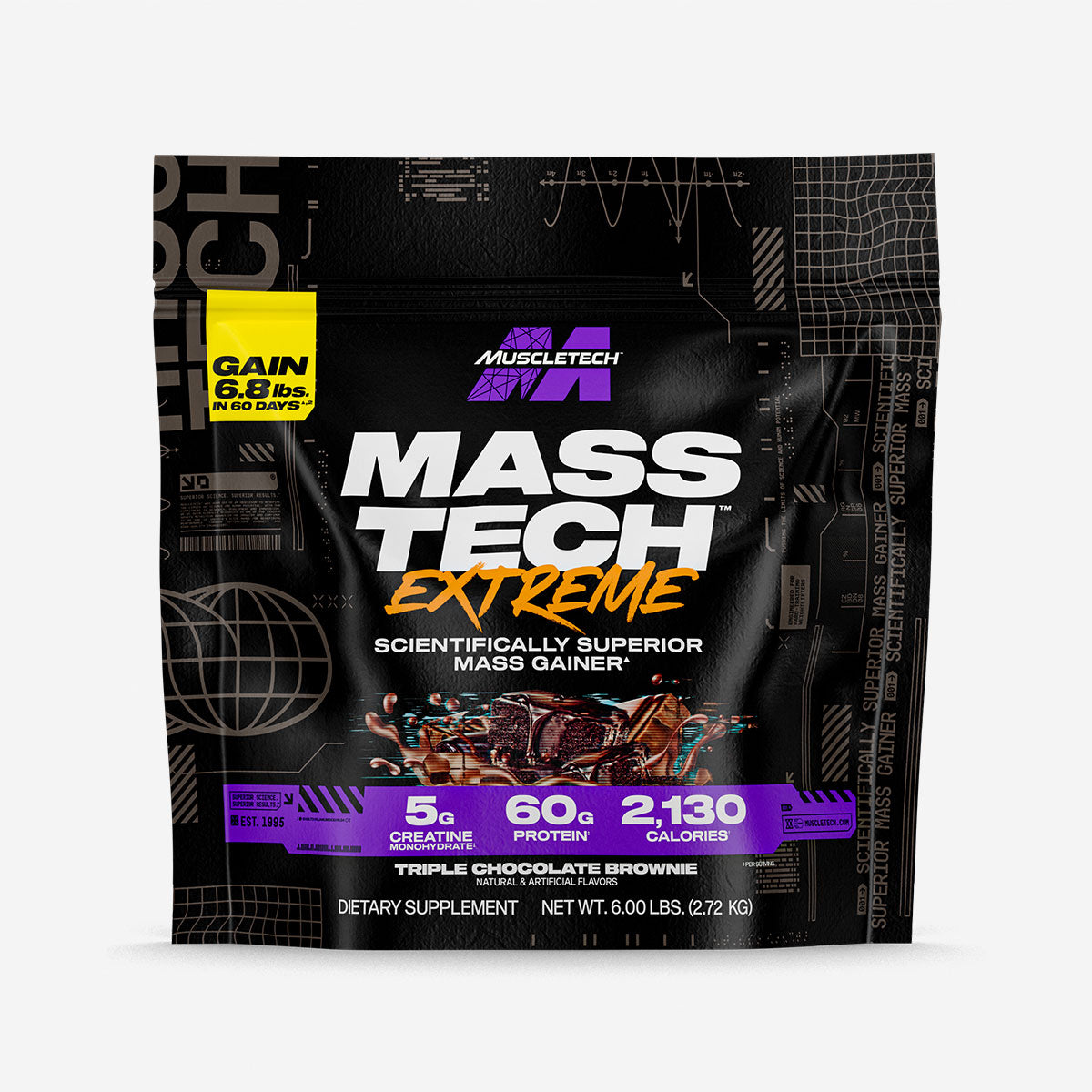
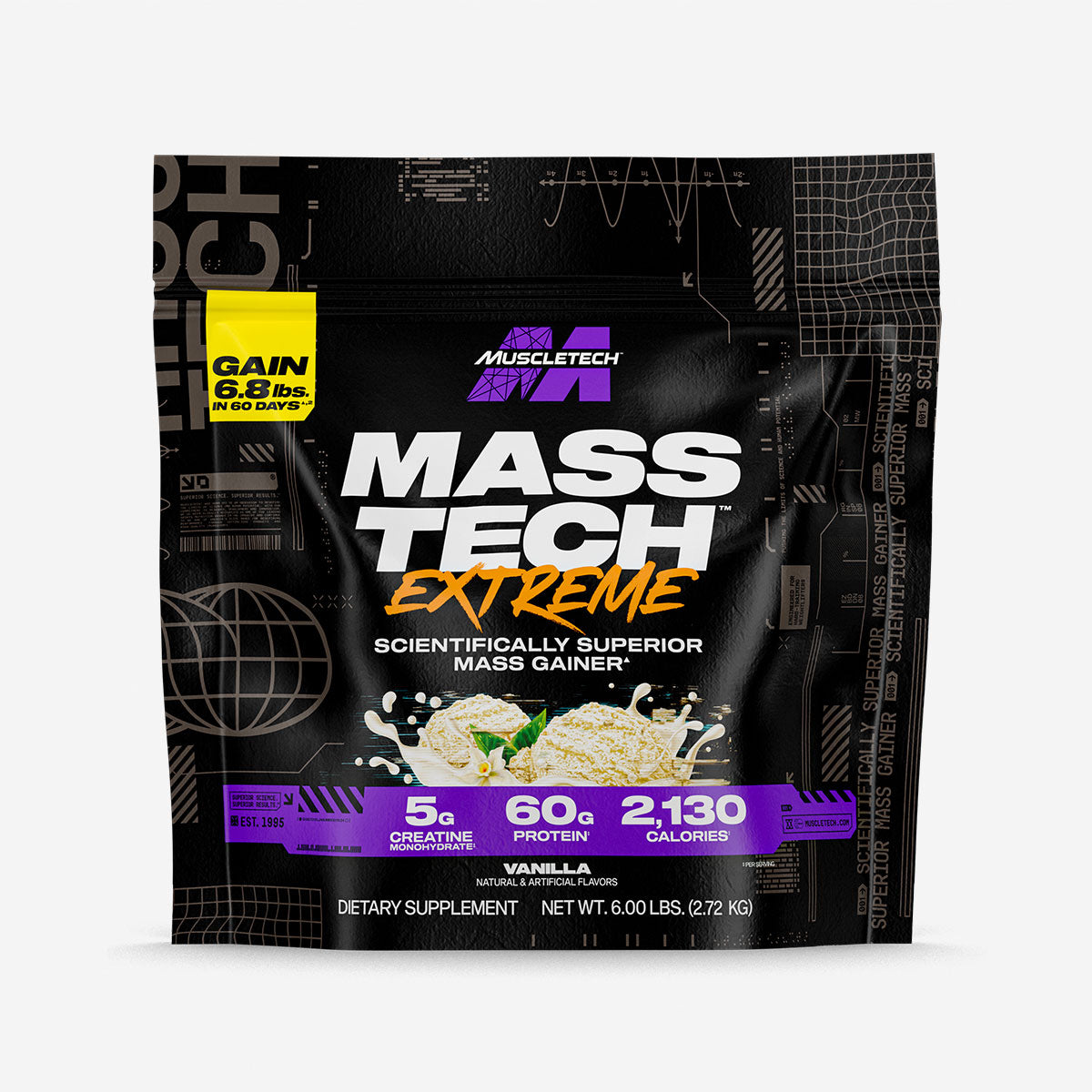
The calorie monster. 2000 calories per scoop with 63g protein. MuscleTech's 7lb tub at $44.99 on Amazon is one of the cheapest per-calorie options. 14 servings. Triple Chocolate Brownie is the strongest flavor. Mix with milk for the full 2000 calorie target, or use half a scoop for a 1000-calorie option.
4. Naked Mass Vanilla (Value Score 28)
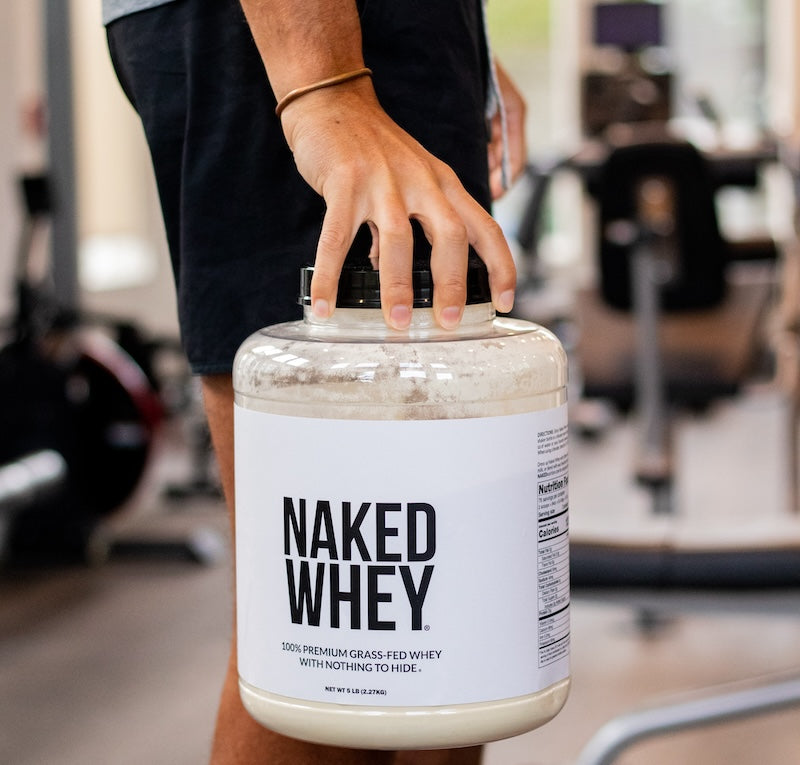
The clean-label leader. Naked Nutrition's 8lb tub uses only four ingredients: whey, casein, organic maltodextrin, and organic tapioca maltodextrin. No artificial sweeteners, flavors, or dyes. 50g protein per scoop, 1250 calories. $89.99 on Amazon. The vanilla pulls higher value than the chocolate by a small margin.
5-7. Mainstream mass gainer tier.
BSN True Mass, ON Serious Mass, MuscleTech Mass-Tech all sit at similar price-per-calorie points and similar flavoring. Serious Mass at 12lb is the best per-tub value but requires significant pantry space. True Mass 1200 has the smoothest flavor profile. Mass-Tech splits the difference.
How to Choose: 7 Things to Look For
1. Protein-to-carb ratio
A ratio of 1:3 to 1:5 is true mass gainer. Above 1:2 is a lean gainer or just whey with carbs. The higher the carb ratio, the cheaper per gram but the lower the protein density.
2. Calories per scoop
Match the scoop size to your daily calorie gap. If you need an extra 600 calories, do not buy a 1250-calorie mass gainer. Use half a scoop, or buy a smaller-scoop product.
3. Carb source quality
Dextrose and maltodextrin are fast-absorbing. Oat flour, barley flour, and organic tapioca are slower-absorbing. Slower-absorbing carbs cause less of an insulin spike, which matters if you have metabolic concerns. Most cheap mass gainers lean dextrose-heavy.
4. Sugar content
Some mass gainers add sucrose or fructose for sweetness. This is just sugar by a different name. A mass gainer with 30g added sugar per scoop is heavier on sugar than a soda. Read the Nutrition Facts panel under "Added Sugars."
5. Protein source quality
Most mass gainers use whey concentrate at the base. Some use a blend of whey, casein, and egg. Cheaper formulations sometimes substitute soy protein or hydrolyzed gelatin (gelatin is incomplete protein). Read the panel.
6. Filler audit
Some products pad weight with cheap maltodextrin and inflate the apparent value. Calculate protein per dollar and protein per 100g of powder. If protein density is below 12%, you are mostly buying carbs.
7. Sweetener and flavor
Mass gainers have to flavor a much higher volume of powder per serving. The flavor experience is less reliable than whey. Read reviews specifically for flavor before committing to 6-12lb tubs.
Price + Value Analysis
Mass gainer pricing in 2026 splits into three tiers.
Budget gainer ($0.012-$0.018 per gram protein). Nutricost, MuscleTech Mass-Tech, ON Serious Mass. High-carb formulations, basic flavoring, broad retailer availability.
Mainstream gainer ($0.018-$0.025 per gram protein). BSN True Mass, Dymatize Super Mass Gainer, Cellucor COR-Performance Gainer. Mid-range carb formulations, established flavor systems.
Clean-label gainer ($0.025-$0.040 per gram protein). Naked Mass, Transparent Labs Mass Gainer. Whole-food carbs, no artificial ingredients, premium pricing.
For numerical context: at one full scoop per day (1200 calories), a 6lb tub of mass gainer lasts roughly 15 days. A 12lb tub of Serious Mass lasts 30 days at $0.18 per 1000 calories. The same 1200 calories from rice ($0.50/lb) and chicken thigh ($2.50/lb) cost roughly $0.10. Mass gainer is a convenience premium, not a cost-saving tool.
This is the underlying economics that drives the category. A buyer who needs an extra 1200 calories per day and chooses Serious Mass will spend roughly $700 per year on mass gainer alone. The same calorie surplus from whole food (rice, oats, peanut butter, milk) costs roughly $200 per year. The $500 premium pays for convenience, shelf stability, and the ability to drink a meal in 60 seconds rather than chew through 800g of cooked rice.
Subscription pricing exists on a few mass gainers (Naked Mass, Transparent Labs). Auto-ship discounts of 10-20% can move premium clean-label gainers closer to mainstream pricing if your consumption is predictable enough to commit to monthly delivery.
Mass Gainer in a Bulk Phase Strategy
The most effective use of mass gainer is as a tactical tool within a broader bulking phase, not as a primary protein source. Here is the framework that works for serious lifters.
Step 1: Establish a baseline. Track your bodyweight and intake for 1-2 weeks at your current eating pattern. If you are gaining weight, you are above maintenance. If you are stable, you are at maintenance.
Step 2: Set a target gain rate. 0.5-1.0lb per week is the typical recommendation for adding muscle without excessive fat gain. That requires a 250-500 calorie daily surplus.
Step 3: Increase whole food first. Add rice, oats, potatoes, and additional protein sources to your existing meals. Most lifters can add 500 calories without using mass gainer.
Step 4: Deploy mass gainer to close the gap. If after adding whole food you are still under target, use mass gainer as a half-scoop between meals to add another 300-600 calories. This is the gap-filling use, not the primary fuel.
Step 5: Monitor and adjust. Weigh weekly. If gaining too fast (above 1lb/week consistently), cut back. If gaining too slow, increase. Mass gainer is the easiest variable to adjust because each scoop is a known calorie amount.
Step 6: Exit when goal is met. Stop mass gainer when you reach your target weight. Continued use after reaching the target leads to unwanted fat gain.
Common Mistakes Buyers Make
Buying mass gainer when you do not need extra calories. The number one mistake. Mass gainer is fat-gain fuel for users at or above maintenance. Run the calorie math before buying.
Drinking a full scoop at once. 1250 calories in 16oz is a lot of volume and a lot of sugar at once. Many users get gut distress. Split into two half-doses across the day.
Replacing meals with mass gainer. Mass gainer is for adding calories on top of meals, not replacing them. Meal replacement requires more balanced macros and micronutrients than mass gainer provides.
Comparing mass gainer prices to whey prices on protein-per-dollar. Mass gainer is cheaper per gram of protein only because most of the price is going to cheap carbs. The relevant comparison is per gram of protein from the protein fraction, not the total.
Continuing past the bulk phase. Mass gainer is a phase tool. Once you reach your weight goal, stop. Many lifters continue out of habit and gain unwanted fat.
Mixing mass gainer in 8oz of water. The high carb load needs more liquid to be palatable and digestible. 16-20oz of milk or water is appropriate.
How to Use Mass Gainer
Dosage. One scoop per day is typical, sometimes split into two half-doses. The total target depends on your calorie gap. Do not exceed two full scoops per day unless your target is above 4000 calories.
Timing. Post-workout is most effective because the carb load aids glycogen replenishment. Mid-morning and mid-afternoon between meals are good for spacing calories. Avoid mass gainer within 2 hours of bedtime because the carb load can interfere with sleep.
Mixing. 16-20oz of cold milk or water. Mass gainer is dense and thick. A blender works better than a shaker for full mixing. Add powder to liquid, blend 30 seconds, drink within 10 minutes.
With training. The post-workout window is the canonical use. Train hard, drink the shake within an hour, then eat a regular meal 1-2 hours later.
DIY Mass Gainer Recipe
For most users, a homemade mass gainer is cheaper, more nutritious, and tastes better than packaged options. Standard recipe:
- 1 scoop whey protein (120 calories, 24g protein)
- 1 cup rolled oats, dry (300 calories, 10g protein)
- 1 cup whole milk (150 calories, 8g protein)
- 1 large banana (110 calories)
- 2 tablespoons peanut butter (190 calories, 8g protein)
Total: roughly 870 calories, 50g protein. Cost: roughly $1.50. A scoop of commercial mass gainer at 1250 calories costs roughly $3.00. The homemade version delivers more protein, real fiber, micronutrients from the banana, and you control the sweetness.
Blend everything with ice for 60 seconds. Drink within 15 minutes. The texture is similar to a milkshake. Variations: swap milk for chocolate milk, add ice cream, add yogurt, swap peanut butter for almond butter. The same template scales up easily for users needing 1500-2000 calorie shakes.
Storage + Shelf Life
Sealed mass gainer lasts 18-24 months. Opened mass gainer lasts 6-9 months in normal storage. Mass gainers actually have shorter shelf life than pure whey because of added fats that oxidize and the larger volume which is opened more frequently.
Storage rules:
- Tightly sealed, below 75F room temperature.
- Avoid refrigeration (condensation).
- Use the scoop, not a wet cup.
- Discard if rancid smell appears (fat oxidation) or clumps will not break.
Side Effects + Considerations
Gut distress. The big one. High-carb high-volume shakes cause gas, bloating, or diarrhea in some users. Start with half a scoop and increase gradually.
Insulin spike. Dextrose and maltodextrin spike blood sugar sharply. For healthy active users this is not harmful and may aid recovery. For users with diabetes or insulin resistance, mass gainer is contraindicated.
Fat gain. Calories are calories. If you exceed your needs, the surplus becomes fat. Mass gainer makes this easy to do unintentionally.
Dental concerns. High sugar mass gainers can contribute to tooth decay if consumed frequently without rinsing. Rinse mouth after each shake.
Acne. The combination of whey and high-glycemic carbs is associated with acne in some users. Test by stopping for 4-6 weeks if new acne appears.
Kidneys. Mass gainer protein at typical doses does not damage kidneys in healthy adults. People with kidney disease should consult their physician.
Frequently Asked Questions
Do I actually need a mass gainer?
Most people do not. Useful for genuine hardgainers, athletes with very high calorie demands, and underweight individuals.
Mass gainer vs whey, what is the difference?
Whey is roughly 120 calories with 24g protein. Mass gainers deliver 600-1250 calories with 50-60g protein. The difference is added carbs and fats.
How much mass gainer per day?
One scoop, often split into halves. Depends on the calorie gap between maintenance and target.
Will mass gainer make me fat?
It can. Calories become fat if you exceed your needs. Hardgainers gain mostly muscle. Sedentary users gain mostly fat.
Is dextrose bad for you?
Not harmful for healthy active individuals post-workout. Concerning for diabetics or sedentary users.
Can I make my own mass gainer?
Yes. Blend whey, oats, milk, banana, peanut butter. Half the cost, more nutrients. See DIY recipe above.
When should I drink mass gainer?
Post-workout is most effective. Avoid within 2 hours of bedtime.
Is mass gainer the same as whey?
No. The base is whey but most of the calories come from added carbs.
Are there clean-label mass gainers?
Yes. Naked Mass and Transparent Labs Mass Gainer use whole-food carbs and no artificial ingredients.
Can mass gainer cause acne?
Possible. Whey plus high-glycemic carbs both associated with acne in observational studies. Test by removing.
How is Value Score calculated?
Combines protein per dollar, protein per 100g, sugar content, and ingredient transparency. See how it works.
Related Guides
See live mass gainer rankings
9 mass gainer products, 12 retailers, refreshed throughout the day.
Browse Mass Gainer Catalog →