The Complete Guide to Whey Isolate (2026)
Whey protein isolate is the higher-purity cousin of standard whey. It is what you upgrade to when lactose makes you bloated, when you want maximum protein per calorie, when you are doing keto, or when you are tired of the chalky aftertaste that low-end concentrate sometimes carries. The category has 51 products in our live catalog, ranging from $0.022 to $0.055 per gram of protein, with the price spread driven mostly by sourcing (grass-fed versus conventional), filtration method (cross-flow versus ion exchange), and brand positioning (mainstream versus clean-label).
This guide covers what isolate actually is, how the filtration math works, who genuinely needs it versus who is paying extra for nothing, the eight highest-Value-Score isolate products in our catalog, what to look for on the label, real numbers on price tiers, the mistakes buyers make, dosage and timing, storage rules, and an honest discussion of side effects. Whether you are switching from concentrate or buying your first tub, this is the reference. By the end you will know whether isolate is worth the premium for your specific situation and exactly which tub to buy.
The isolate market has shifted significantly in the last three years. The 2018 Clean Label Project findings put pressure on every major brand to publish third-party Certificates of Analysis. Hydrolyzed isolate, once a niche premium product, is now mainstream thanks to Dymatize ISO100's broad retail distribution. Direct-to-consumer brands like MyProtein and Transparent Labs have squeezed mid-tier pricing by selling factory-direct. The net result: a buyer in 2026 has more good options under $60 than in any year prior, and the gap between "premium grass-fed" and "mainstream conventional" has narrowed in objective quality even if marketing language keeps it wide.
Quick answer: The best value whey isolate in 2026 is MyProtein Impact Whey Isolate 5.5lb at $54.99 direct (Value Score 42). The best mainstream option is Dymatize ISO100 5lb at $59.99. The cleanest label is Transparent Labs 100% Whey Isolate 5lb at $59.99 direct. The cheapest is Nutricost Whey Isolate 5lb at $54.99 on Amazon. For lactose intolerance, Dymatize ISO100 is the gold standard.
In this guide
What Is Whey Isolate?
Whey isolate is whey concentrate that has been through additional filtration to push the protein content above 90% and reduce the lactose, fat, and ash to trace amounts. Where a typical whey concentrate is 70-80% protein and 4-8% lactose, isolate is 90%+ protein and under 1% lactose. The remaining mass is residual moisture (about 4-5%) and tiny amounts of minerals and fat. From a consumer point of view, isolate is the cleaner, purer, more expensive, and more lactose-friendly tier of whey.
Isolate exists because conventional whey concentrate has limits. The 4-8% lactose in concentrate is enough to trigger symptoms in lactose-intolerant users (which is roughly 65% of the global adult population, with significant variation by ancestry). The residual fat in concentrate also limits its use in cutting diets where every macro counts. Isolate solves both: low lactose, low fat, high protein per gram. The tradeoff is cost. Each additional filtration step adds energy and equipment time, which the manufacturer prices into the final product.
Isolate is for: lactose-sensitive users who get bloated or gassy from concentrate, lifters on a cutting diet who care about maximum protein per calorie, athletes who train fasted and want minimum digestive distraction, people who care about ingredient transparency and want a label with two or three ingredients rather than ten, and ketogenic dieters who need to minimize carbohydrate per scoop. Isolate is not necessary for most lifters. Concentrate delivers the same amino acid profile at lower cost, and the body cannot tell the difference for muscle protein synthesis purposes.
How Whey Isolate Is Made
The first stages are identical to standard whey concentrate. Raw sweet whey leaves the cheese plant, is pasteurized and chilled, and is concentrated via microfiltration and ultrafiltration to roughly 80% protein. This is the concentrate stage. To take it to isolate, manufacturers use one of two further processes.
Cross-flow microfiltration (CFM). The concentrate liquid is passed through ceramic membranes at high pressure with the flow parallel to the membrane surface (cross-flow) rather than through it. This sweeps fouling material off the membrane continuously, allowing further removal of lactose, fat, and ash while keeping protein on the retained side. CFM is the dominant method among premium brands because it preserves the native protein structure, retains immunoglobulins and bioactive peptides intact, and uses no acid or alkali. It is also the most expensive method. Optimum Nutrition, Dymatize, Transparent Labs, and most premium isolates use CFM.
Ion exchange (IX). The concentrate passes through a column of electrically charged resin beads. Whey proteins, which carry a net charge that depends on pH, bind selectively to the resin. Washing the column then elutes the proteins. IX produces isolate with very high protein content (often 92-94%) but slightly denatures some of the bioactive peptide fraction. The flavor profile is also slightly different. IX is cheaper than CFM and is used in some budget and mid-tier isolates.
The final filtered liquid is spray-dried at controlled temperatures. Flavor systems are added after drying. For hydrolyzed isolate, an additional enzymatic hydrolysis step partially breaks down protein chains into smaller peptides before drying. This makes the resulting powder absorb 15-20% faster, which matters slightly for athletes who want extreme post-workout speed. Hydrolyzed isolate costs roughly 20-40% more than standard isolate. Dymatize ISO100 is the best-known hydrolyzed isolate on the US market.
Isolate vs Alternatives
Isolate vs concentrate. The big choice. Isolate has under 1% lactose; concentrate has 4-8%. Isolate is 90%+ protein by weight; concentrate is 70-80%. Per gram of protein, isolate costs roughly 30-50% more. If you do not bloat on concentrate, you do not need isolate.
Isolate vs hydrolysate. Hydrolysate is isolate with the protein partially pre-digested by enzymes. Absorption is slightly faster. For most users the marginal benefit is not worth the 20-40% price premium.
Isolate vs casein. Different absorption profiles, different uses. Isolate is fast (1-2 hours), casein is slow (5-7 hours). Many lifters use both, isolate post-workout and casein before bed. See our casein guide.
Isolate vs plant protein isolate. Pea, soy, and rice isolates exist for vegans. Pea isolate is the strongest plant option, with leucine content roughly 90% of whey isolate. For non-vegans, whey isolate is the simpler choice. See our plant protein guide.
Isolate vs clear whey. Clear whey is hydrolyzed isolate processed to be juice-like rather than creamy. Useful for hot weather or users who hate milkshake textures. Same protein per scoop, different drinking experience. See our clear whey guide.
Top Picks Right Now
Our catalog has 51 whey isolate products. These are the eight highest-Value-Score options available in May 2026, ranked by value across our 12 tracked retailers.
| # | Product | Source | Best Price | Score |
|---|---|---|---|---|
| 1 | MyProtein Impact Whey Isolate 5.5lb | Conventional | $54.99 (MyProtein) | 42 |
| 2 | Transparent Labs 100% Whey Isolate 5lb | Grass-fed | $59.99 (TL direct) | 41 |
| 3 | Dymatize ISO100 5lb | Conventional, hydrolyzed | $59.99 (Amazon) | 32 |
| 4 | Dymatize ISO100 Birthday Cake 5lb | Conventional, hydrolyzed | $59.99 (Amazon) | 33 |
| 5 | Optimum Nutrition Gold Standard Isolate 5lb | Conventional | $64.99 (Walmart) | 30 |
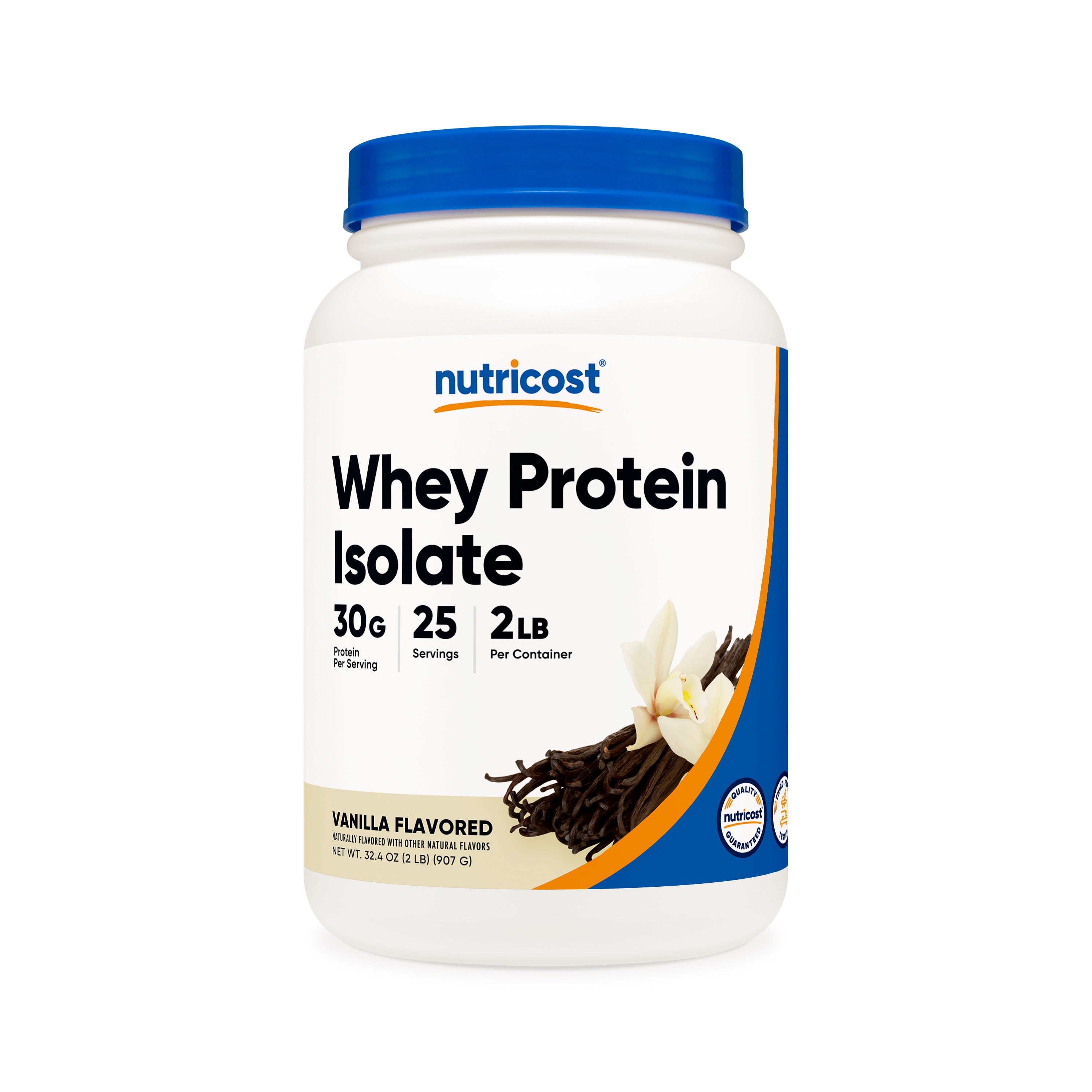
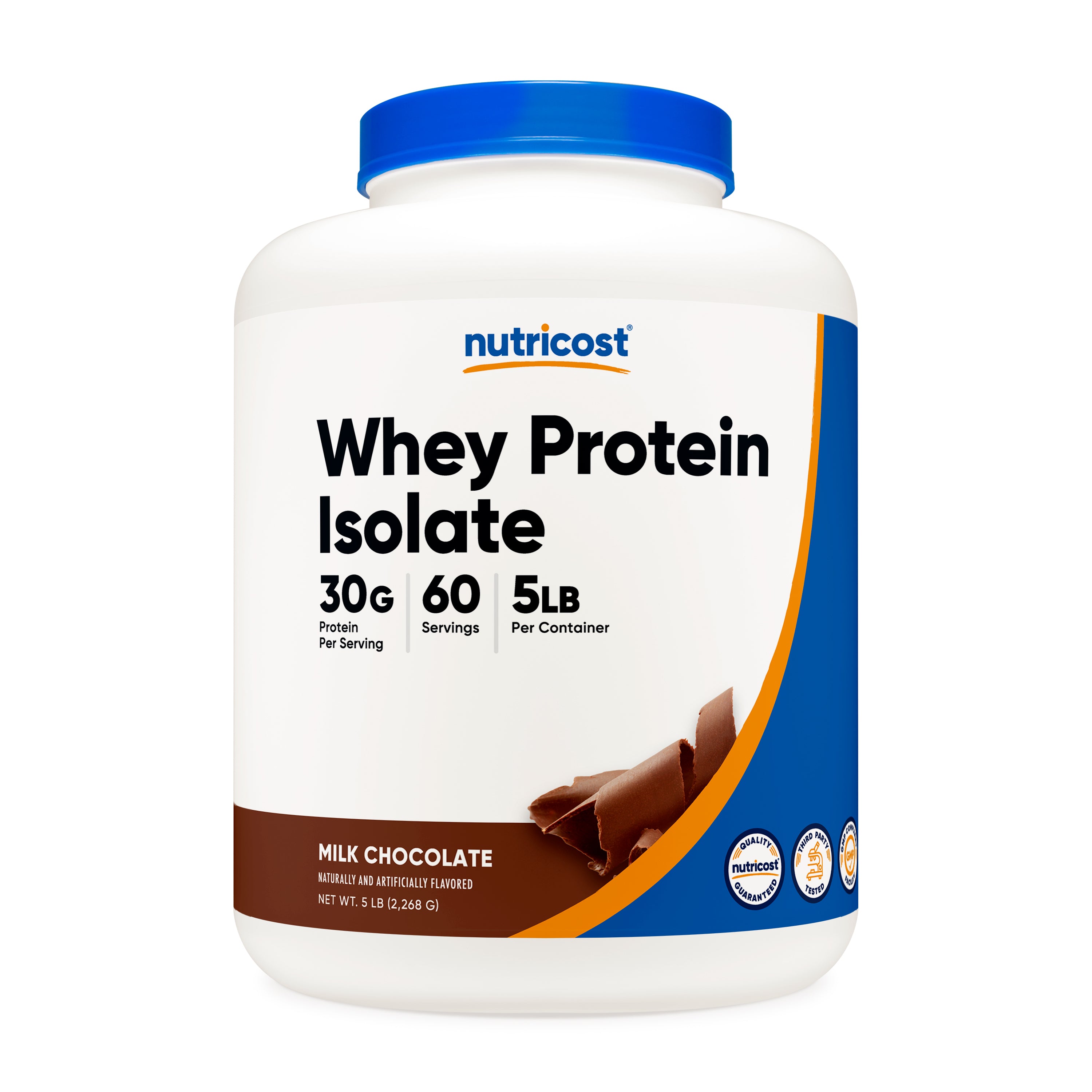
| 6 | Nutricost Whey Isolate 5lb | Conventional | $54.99 (Amazon) | 29 |
| 7 | Cellucor COR-Performance Isolate 4lb | Conventional | $54.99 (Amazon) | 27 |
| 8 | Levels Grass-Fed Whey Isolate 5lb | Grass-fed | $69.99 (Amazon) | 25 |
1. MyProtein Impact Whey Isolate (Value Score 42)
MyProtein's 5.5lb bag direct from us.myprotein.com is the highest-value whey isolate in our catalog. 79 servings of 25g protein per scoop at $54.99 list price, frequently $34-44 during their monthly flash sales. The chocolate and vanilla flavors are reliable, mixability is good, and the protein content claims have passed Labdoor testing. The downside is direct-only shipping with 4-7 day delivery from the US fulfillment center. Plan ahead.
2. Transparent Labs 100% Whey Isolate (Value Score 41)
Transparent Labs uses grass-fed Wisconsin whey, cold-processed cross-flow microfiltration, and a label with no artificial sweeteners, dyes, or fillers. 28g protein per scoop, 76 servings per 5lb tub. At $59.99 direct, this is the highest-clean-label-trust isolate on the market. Stevia-sweetened, which some users prefer and others do not. French Vanilla is the strongest flavor.
3. Dymatize ISO100 (Value Score 32)
Dymatize ISO100 is the lactose-intolerance gold standard. Hydrolyzed for slightly faster absorption, 25g protein per scoop, 71 servings per 5lb tub. The Gourmet Chocolate, Cookies & Cream, Birthday Cake, and Fruity Pebbles flavors are genuinely excellent. At $59.99 on Amazon this is the default isolate recommendation for anyone with dairy sensitivity. See our isolate for lactose intolerance guide.
4. Dymatize ISO100 Birthday Cake (Value Score 33)
The novelty flavor that sells more than the standard options. Same formula, $59.99 on Amazon.
5. Optimum Nutrition Gold Standard 100% Isolate (Value Score 30)
The isolate version of the most popular whey product in America. 24g protein per scoop, 71 servings per 5lb tub. At $64.99 on Walmart this carries a slight premium versus mainstream isolates but the flavor and mixability are reliably excellent. Choose if you already trust ON Gold Standard.
6. Nutricost Whey Isolate (Value Score 29)
The cheapest credible isolate option. Nutricost's 5lb tub at $54.99 on Amazon delivers 91% protein content per 100g, which is good. Plain packaging, basic flavor, no marketing budget. Buy if cost-per-gram-of-protein is the only criterion.
7. Cellucor COR-Performance Isolate (Value Score 27)
Cellucor's flagship isolate. 4lb tub at $54.99 on Amazon, 54 servings of 25g protein. Solid mid-tier mainstream option, especially when on sale at GNC or Amazon.
8. Levels Grass-Fed Whey Isolate (Value Score 25)
The cleanest US grass-fed isolate at a reasonable premium. 25g protein per scoop, grass-fed Wisconsin source, no artificial sweeteners. $69.99 on Amazon for the 5lb tub. Buy if grass-fed sourcing matters to you.
How to Choose: 7 Things to Look For
1. Confirm it is actually isolate
Some products marketed as "whey protein" are actually whey concentrate. Read the ingredient list. The first ingredient should be "whey protein isolate" (not "whey protein concentrate" or "whey protein blend"). Tubs that say "Isolate" prominently on the front but list concentrate as the first ingredient are being misleading.
2. Protein content per 100g
True isolate is 85-92% protein by weight. Divide protein-per-serving by serving-size to get per-100g content. A 30g scoop with 25g protein is 83% (borderline). A 30g scoop with 27g protein is 90% (true isolate). Hydrolyzed isolate can hit 93-94%.
3. Lactose content
True isolate is under 1% lactose. The Nutrition Facts panel does not always list this directly, but you can infer from "Sugars" being below 1g per scoop. If sugars are 2-3g per scoop, the product is closer to concentrate.
4. Filtration method
Cross-flow microfiltration (CFM) is the premium method and is usually stated on the label. Ion exchange is cheaper and equally pure but slightly denatures bioactive fractions. For pure muscle protein synthesis purposes, the difference does not matter. For users who care about intact immunoglobulins, CFM wins.
5. Source quality
Conventional whey comes from Wisconsin and Idaho dairy. Grass-fed whey comes from pasture-raised cows in the US or New Zealand and contains slightly more omega-3 and CLA. The protein quality difference is real but small. Pay the premium if it matters to you.
6. Sweetener system
Sucralose, stevia, monk fruit, and sometimes real sugar are the main options. Some users get gas from sucralose or polyols. If you suspect this, try a tub from a different sweetener system. Naked Whey Isolate unflavored eliminates all sweeteners.
7. Third-party testing
Look for NSF Certified for Sport, Informed Sport, Labdoor verified, or a brand's published Certificate of Analysis. The mainstream and premium brands have invested heavily here since the 2018 Clean Label Project findings. The budget tier is more variable.
Price + Value Analysis
Whey isolate splits into three price tiers in 2026.
Budget isolate ($0.022-$0.030 per gram protein). Nutricost, MyProtein flash sale prices, Bulk Supplements. Plain packaging, basic flavors, often the same OEM as mid-tier brands. Quality is fine but flavor is variable.
Mainstream isolate ($0.030-$0.040 per gram protein). Dymatize ISO100, Optimum Nutrition Gold Standard Isolate, Cellucor COR-Performance, Rule 1 R1 Isolate. The bulk of the market sits here. Reliable flavor, broad retailer availability, third-party testing, and trust.
Premium isolate ($0.040-$0.055 per gram protein). Transparent Labs, Levels, Promix, Ascent. Grass-fed sourcing, clean labels, direct-to-consumer or natural-grocery channels. Premium is real on dimensions you may or may not value.
For numerical context: a 5lb tub used at one scoop per day lasts roughly 75 days. Budget tier costs $200-275 per year. Mainstream tier costs $275-350 per year. Premium tier costs $350-450 per year. The cost gap between tiers, measured per year, is roughly $100-150.
One subtle pricing pattern in 2026: hydrolyzed isolate now sits roughly at parity with standard isolate on a per-gram basis. Five years ago hydrolyzed carried a 30-40% premium. Dymatize's price aggression on ISO100, combined with broader use of enzymatic hydrolysis in mass production, has effectively flattened that gap. If you were avoiding hydrolyzed for cost reasons, that calculus has changed. The marginal benefit is small, but you no longer pay much extra for it.
Another emerging tier: subscription pricing. Transparent Labs, Promix, and Naked Nutrition all offer 10-20% discounts on auto-ship subscriptions. If you know you will use a tub per month, subscription effectively moves premium isolate into mainstream pricing. The catch is that auto-ship works only if your consumption is predictable. For variable users, single-purchase remains better value.
Common Mistakes Buyers Make
Buying isolate when concentrate would work. If you do not bloat on concentrate, isolate is paying 30-50% more for marginal benefit. Test concentrate first, switch only if symptoms drive you.
Assuming all isolates are similar. Hydrolyzed isolate, ion-exchange isolate, and cross-flow isolate differ in absorption speed, flavor, and bioactive content. Read the label.
Paying for "WPI" on the front but getting WPC inside. The first ingredient on the panel is the dominant ingredient. If "whey protein concentrate" precedes "whey protein isolate," you are buying a blend marketed as isolate.
Comparing protein per scoop across different scoop sizes. A 27g scoop and a 31g scoop both delivering "24g protein" are not equivalent. The smaller scoop is purer. Calculate per-100g protein content for the honest comparison.
Buying the smallest size for a sensitive flavor. Isolate flavoring is harder to nail than concentrate because there is less fat to carry the flavor. The same brand's vanilla in concentrate often tastes better than in isolate. Sample before committing to a 5lb tub.
Mixing isolate in hot liquids. Isolate denatures in hot coffee or tea, producing a gummy texture. Mix in cold or room-temperature liquid only.
How to Use Whey Isolate
Dosage. 25-30g protein per scoop is typical. One to two scoops per day, alongside food protein, hits the 1.6-2.2g per kg daily target for most active adults. There is no benefit to taking more than 40g in a single sitting; muscle protein synthesis saturates around that point.
Timing. Isolate is fastest-absorbing whey, which makes it useful post-workout when you want a quick amino acid spike. The "30-minute anabolic window" has been substantially revised; the window is several hours wide. Take it whenever fits your schedule. See our protein timing guide.
Mixing. 8-10oz of cold water or milk. Add powder after liquid. Shake hard for 15 seconds. Isolate mixes more smoothly than concentrate because there is less fat to clump.
In food. Isolate stirs into oatmeal, Greek yogurt, smoothies. Avoid baking above 350F. For protein pancakes, blend isolate with cottage cheese for a stable batter.
For cutting diets. Isolate is the format of choice when calories are constrained because it delivers maximum protein per calorie. A 110-calorie scoop with 27g protein is harder to beat in any whole-food format. The same protein in chicken breast costs roughly 120 calories. In Greek yogurt, roughly 180. In eggs, roughly 200. Isolate's calorie-per-gram-of-protein efficiency is the underlying reason cutting dieters and physique athletes lean on it.
For older adults. Sarcopenia (age-related muscle loss) starts in the late 30s and accelerates after 50. Recent research suggests older adults need higher per-meal protein doses (around 30-40g) to trigger muscle protein synthesis at the same rate as younger adults, due to anabolic resistance. Isolate is a convenient way to hit those higher per-meal targets without consuming excess calories. See our protein for seniors guide.
For travel. Single-serving isolate packets (available from Optimum Nutrition, Dymatize, and MyProtein) are convenient for hotels and travel days. The cost-per-serving is higher but the convenience often justifies it.
Storage + Shelf Life
Sealed isolate lasts 18-24 months from manufacture date stored cool and dry. Most US-shipped tubs are 2-4 months from manufacture when received, leaving 14-22 months of unopened shelf life.
Once opened, isolate lasts 9-12 months in normal storage. Isolate actually keeps longer than concentrate because lower residual fat means less oxidation. The powder loses flavor potency slowly over time but does not turn dangerous.
Storage rules:
- Tightly sealed. Air is the enemy.
- Below 75F room temperature is ideal. Refrigeration causes condensation.
- Use the scoop, not a wet measuring cup.
- Humid climates: transfer to an airtight container with a silica gel pack.
- Discard if clumps will not break apart or smell or taste is off.
See our does protein powder expire guide.
Side Effects + Considerations
Lactose-related symptoms. Isolate at under 1% lactose resolves most lactose-related bloating, gas, and cramping. Users who continue to have symptoms on isolate usually have a true dairy protein allergy (whey or casein) rather than lactose intolerance, or are reacting to sweeteners.
Dairy protein allergy. True dairy protein allergy is rare in adults but real. Symptoms include hives, throat tightness, and digestive distress. People with true dairy allergy should avoid all milk-derived protein including isolate, and should consider plant-based protein.
Acne. Whey can spike insulin and IGF-1, both associated with acne in some users, particularly teenagers. Causation is debated. If new whey use coincides with new acne, test by switching to plant for 4-6 weeks.
Kidneys. Whey isolate at typical doses does not damage kidneys in healthy adults. People with pre-existing kidney disease should discuss with their physician. See can too much protein hurt kidneys.
Sweetener gas. Some users get gas from sucralose, polyols, or stevia. Try a tub from a different sweetener system if you suspect this.
Heavy metals. Mainstream and premium isolates publish third-party Certificates of Analysis and have invested heavily in heavy-metal monitoring since the 2018 Clean Label Project investigations. Budget tier is more variable.
Frequently Asked Questions
Is whey isolate better than whey concentrate?
Better for what. Isolate is better if you are lactose-sensitive, want minimal fat and carbs, or care about maximum purity. Concentrate is better on price per gram. For muscle protein synthesis the difference is negligible.
Does whey isolate cause bloating?
Far less than concentrate. Isolate is under 1% lactose, which resolves most lactose-related symptoms.
How much whey isolate per day?
One to two scoops, 25-50g protein, is typical. Total daily protein around 1.6-2.2g per kg is the underlying target.
Is hydrolyzed whey isolate worth the premium?
Slightly faster absorption, real cost premium, marginal MPS benefit. For most users standard isolate is plenty.
Can lactose-intolerant people drink whey isolate?
Most can. Isolate sits at under 1% lactose, below the threshold for symptoms in typical lactose-intolerant users.
Is whey isolate keto-friendly?
Yes. Most isolates contain 1-2g carbs per scoop and fit easily into ketogenic macros.
Is grass-fed whey isolate worth it?
Costs roughly 50-100% more than commodity. Marginal nutritional difference. Buy if sourcing matters to you.
Whey isolate vs hydrolyzed casein?
Different absorption speeds. Isolate is fast (1-2 hours), casein is slow (5-7 hours). Many lifters use both.
How long does whey isolate take to absorb?
Amino acids appear in the bloodstream within 15-30 minutes and peak at 60-90 minutes.
Can I cook with whey isolate?
Low-heat applications yes. Baking above 350F denatures protein.
How is Value Score calculated?
Combines protein per dollar, protein per 100g, sugar content, and ingredient transparency. See how it works.
Related Guides
See live whey isolate rankings
51 isolate products, 12 retailers, refreshed throughout the day.
Browse Isolate Catalog →